We use necessary cookies for site function. For analytics and marketing, we need your consent. You can change your mind anytime. Privacy Policy
Zero-Knowledge Proofs on the Stellar Network: The Future of Privacy
 Olvis Gil · May 27, 2026 · 5 min read
Imagine living in a world where trust, privacy, and efficiency coexist seamlessly. Zero-knowledge proofs (ZK Proofs) make this possible — ensuring that privacy, scalability, and interoperability go hand in hand. By leveraging ZK Proofs on the Stellar Network, we can increase privacy for unbanked people across the globe, enhance scalability for cross-border payment systems, and improve interoperability for cash-to-crypto applications.
What are Zero-Knowledge Proofs?
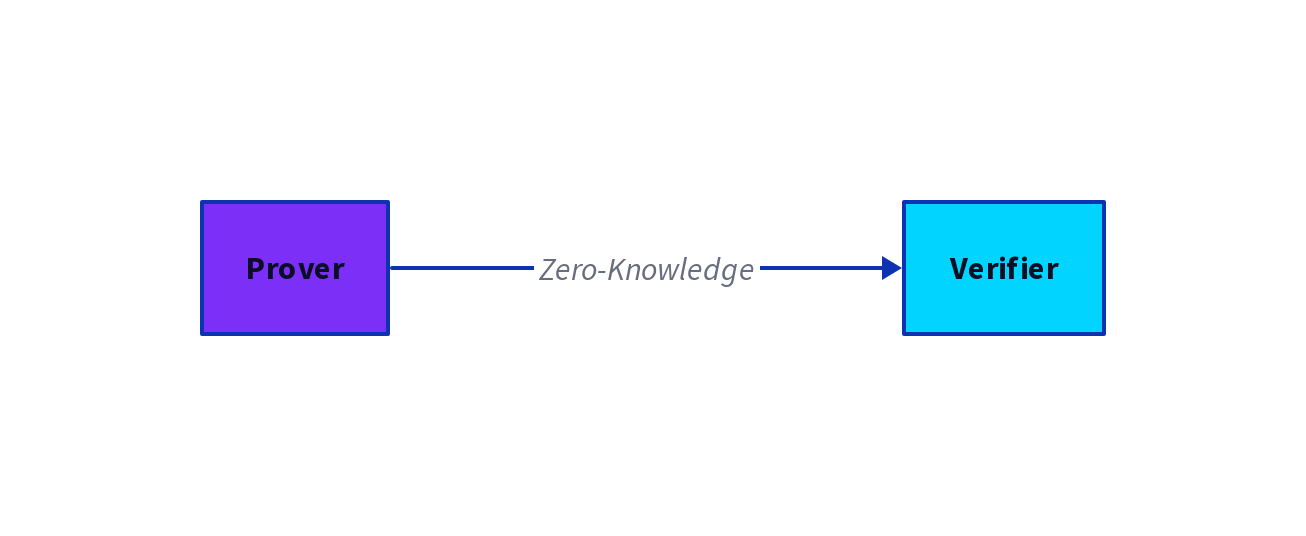
ZK Proofs are a breakthrough in cryptographic technology. They allow one party (the prover) to prove to another (the verifier) that a statement is true without revealing any information beyond the validity of the statement itself.
The Three Pillars of ZK Proofs
Completeness — If the statement is true, an honest prover can always convince the verifier.
Soundness — A cheating prover cannot convince the verifier of a false statement.
Zero-Knowledge — The verifier learns nothing beyond the truth of the statement itself.
Zero-Knowledge Proofs on Stellar
Stellar aims to surpass other networks by utilizing the full capabilities of modern computing. By placing cryptographic processes into dedicated "slots" within each block, the Stellar core protocol can handle larger volumes of transactions without slowing down — a significant advantage for validators and operators managing high-throughput payment corridors.
5 Real-World Use Cases
Tokens protected by zero-knowledge proofs that enable private transactions and balances while maintaining public ledger transparency.
Enables users to prove ownership of a credential without sending secrets over the wire, replacing traditional passwords.
Users complete verification with a trusted provider and selectively disclose aspects of that verification, balancing compliance with privacy.
Provides transparent and private governance — an individual's vote stays private while the overall process remains verifiable.
Moves computation off-chain and verifies a proof on-chain, far more efficient than computing full transaction sets on every node.
Prototyping Privacy Pools
The Stellar ecosystem is actively exploring Privacy Pools — a protocol that incorporates Association Set Providers (ASPs) to define inclusion criteria intended to mitigate illicit use. This enables participants to selectively associate with sets of other participants who meet their chosen compliance standards, achieving privacy guarantees using Groth16 ZK proofs and Circom circuits on Soroban.
As Stellar continues to evolve, the integration of ZK Proofs will undoubtedly play a crucial role in shaping the future of decentralized finance and blockchain privacy.
References
[1] Zero-Knowledge Proofs on Stellar — stellar.org